
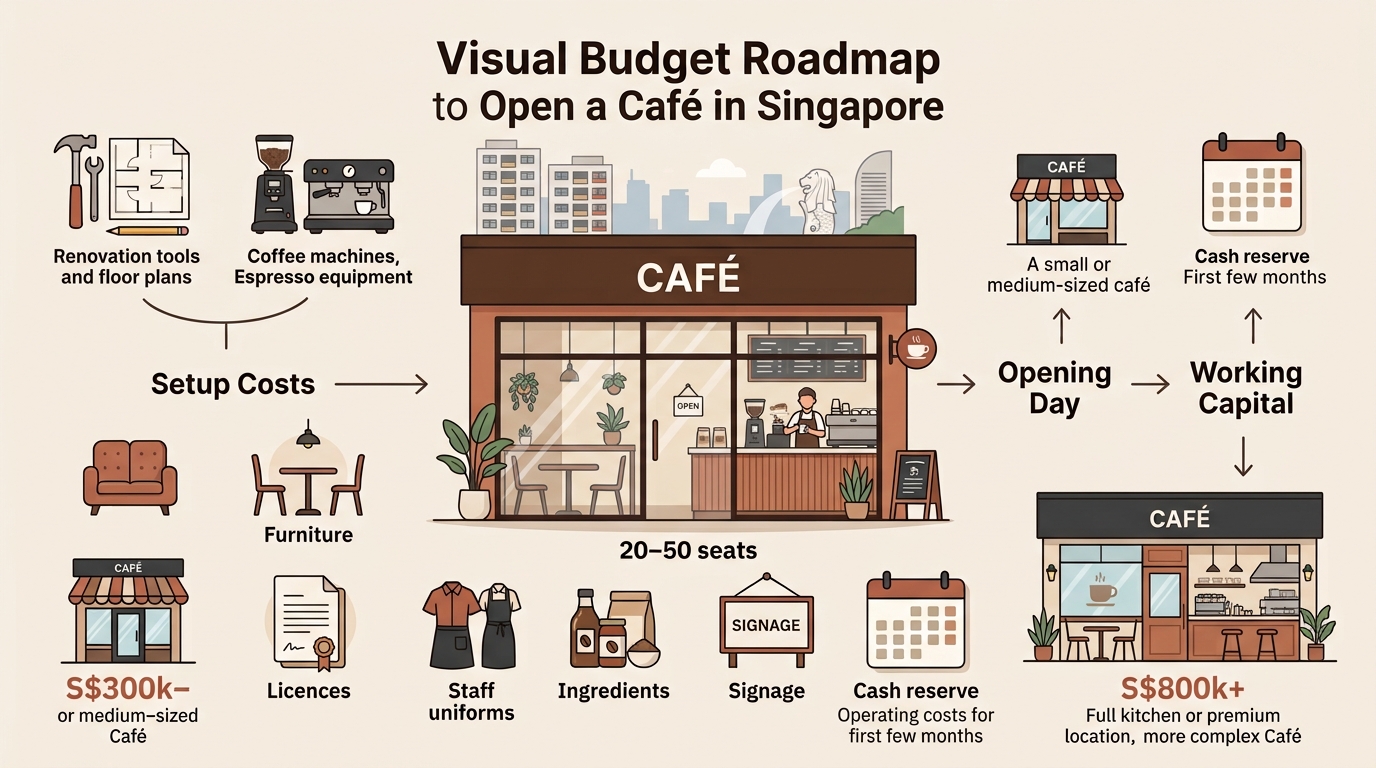
Opening a café in Singapore is a significant investment, but the cost can be planned in manageable stages. For a small or medium-sized café with around 20 to 50 seats, a realistic starting budget is approximately S$300,000 to S$500,000.
A larger café, a full kitchen, extensive renovation or a prime location may bring the total closer to S$800,000 or more.
The key is to plan beyond opening day. Your budget should cover not only the setup, but also the first few months while sales are still building.
Estimated Café Startup Costs
Cost category | Estimated budget |
Rent and deposits | S$30,000–S$90,000 |
Renovation and building works | S$80,000–S$200,000 |
Espresso machine and grinders | S$18,000–S$55,000 |
Kitchen equipment | S$30,000–S$100,000 |
Refrigeration, ice and water filtration | S$16,500–S$58,000 |
Furniture, POS and opening stock | S$28,000–S$75,000 |
Registration and compliance | S$8,000–S$25,000 |
Working capital | S$100,000–S$250,000 |
Estimated total | S$310,500–S$853,000 |
These are planning estimates rather than fixed prices. Your actual budget will depend on the premises, menu, equipment choices and amount of renovation required.
A More Manageable Way to View the Budget
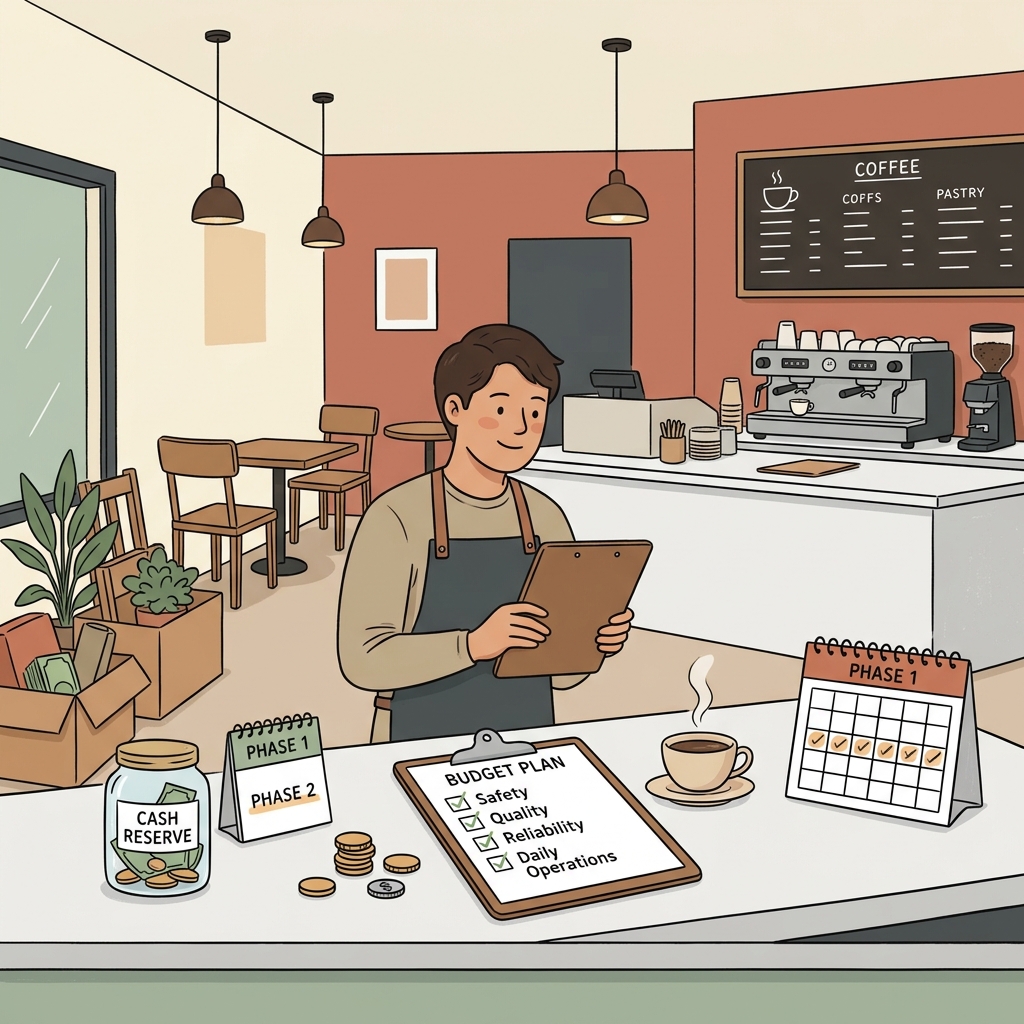
You do not need to spend the maximum amount in every category. A focused concept can help you start responsibly.
For example, costs may be lower if you:
-
Choose an existing food-and-beverage unit
-
Start with a smaller seating area
-
Offer a focused coffee and pastry menu
-
Lease selected equipment
-
Limit renovation to essential works
-
Launch in stages
-
Keep sufficient cash in reserve
The goal is not to spend less at any cost. It is to spend carefully on the things that affect safety, quality, reliability and daily operations.
1. Rent and Deposits: S$30,000–S$90,000
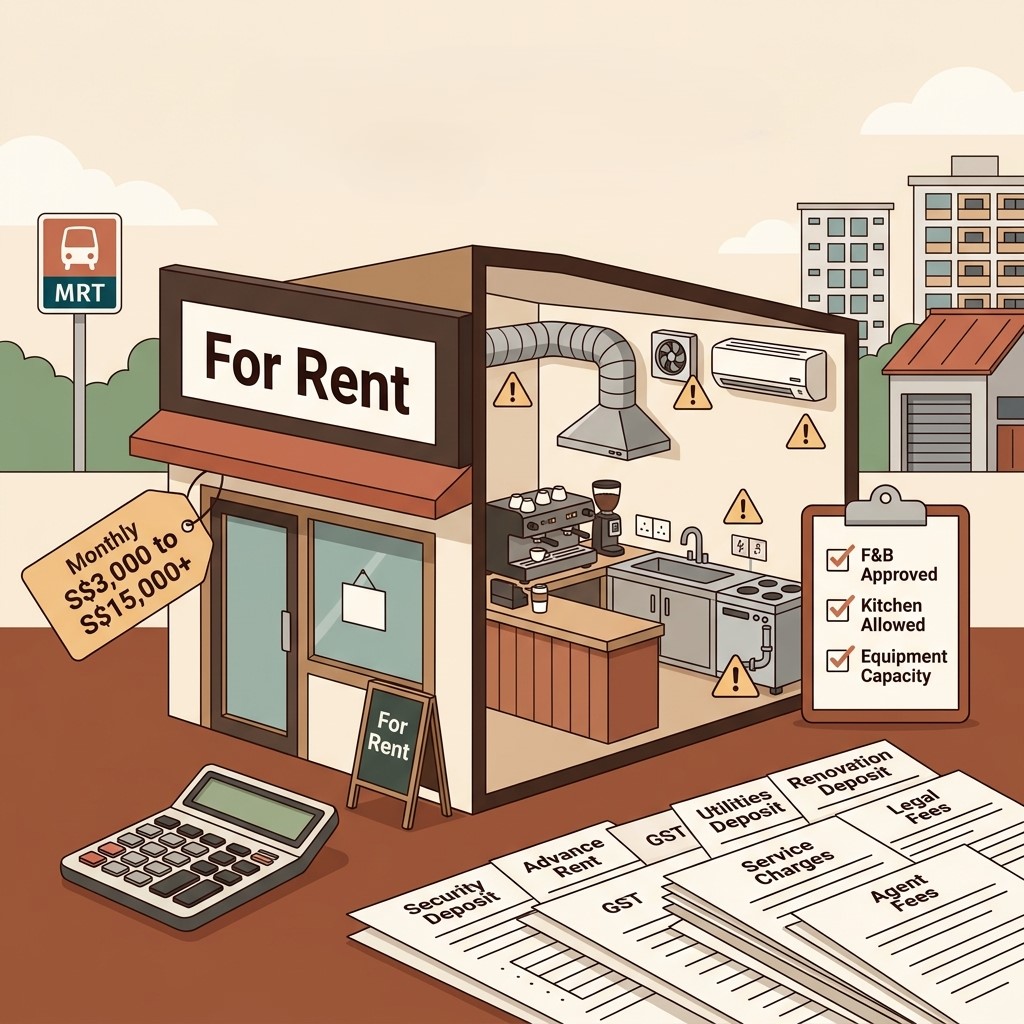
Monthly rent may range from approximately S$3,000 in a heartland or industrial area to more than S$15,000 near an MRT station, shopping mall or popular lifestyle district.
Your initial rental costs may include:
-
Security deposit
-
Advance rental
-
GST on rent, where applicable
-
Utilities and renovation deposits
-
Service charges
-
Legal and agent fees
A lower rent does not always mean a lower overall cost. A cheaper unit may need major work on drainage, electrical supply, exhaust or air-conditioning.
Before signing, confirm that:
-
The premises is approved for food-and-beverage use
-
Your proposed kitchen is allowed
-
The unit can support your equipment and renovation plans
2. Renovation and Building Works: S$80,000–S$200,000
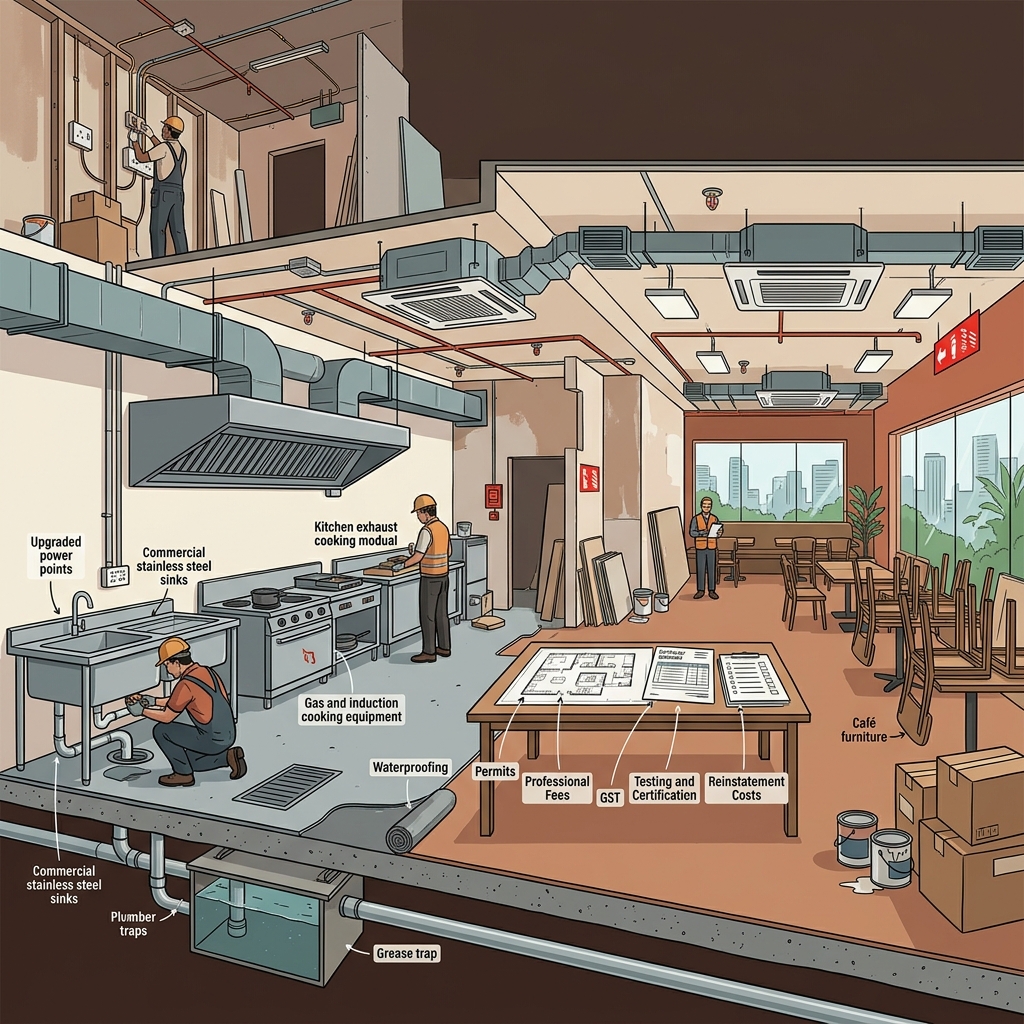
Renovation is often one of the largest upfront expenses. It may include much more than paint, lighting and furniture:
-
Electrical upgrades
-
Plumbing and drainage
-
Grease traps
-
Kitchen exhaust
-
Air-conditioning
-
Waterproofing
-
Fire-safety works
-
Gas or induction systems
-
Commercial sinks and floor traps
Singapore’s warm and humid climate makes good ventilation and cooling especially important.
Ask a café contractor to inspect the unit before you commit. Request a detailed quotation that clearly states whether it includes:
-
Permits
-
Professional fees
-
GST
-
Testing and certification
-
Possible reinstatement costs at the end of the lease
A clear quotation can help prevent unpleasant surprises later.
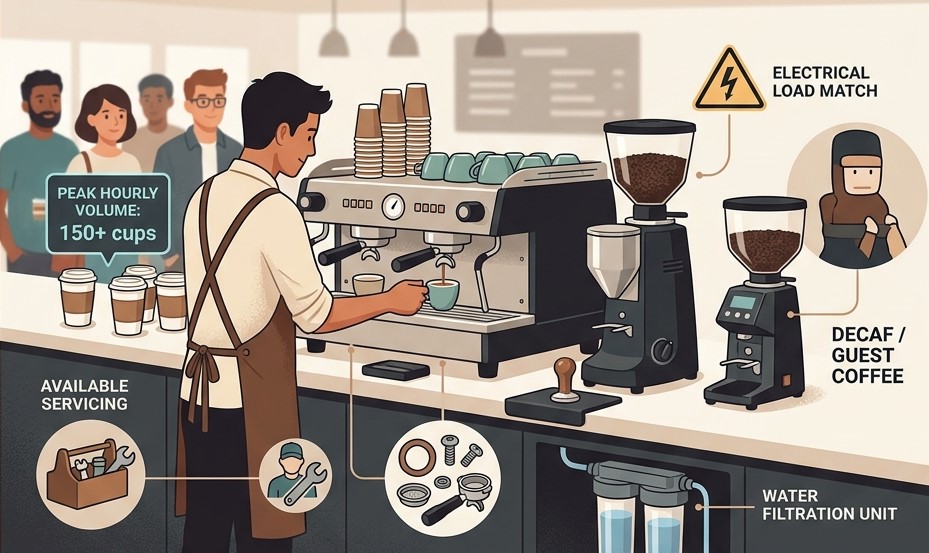
3. Espresso Machines and Grinders: S$18,000–S$55,000
A commercial espresso machine may cost approximately S$15,000–S$45,000, while grinders may add another S$3,000–S$12,000.
The right equipment depends on your expected sales volume, not just how impressive the machine looks. Consider:
-
How many drinks you expect to serve during busy periods
-
Whether local servicing is available
-
Whether spare parts can be obtained quickly
-
Whether the premises can support the electrical load
-
Whether suitable water filtration is included
A second grinder may be useful if you plan to offer decaf, a guest coffee or filter coffee. However, it is not essential for every café from day one.
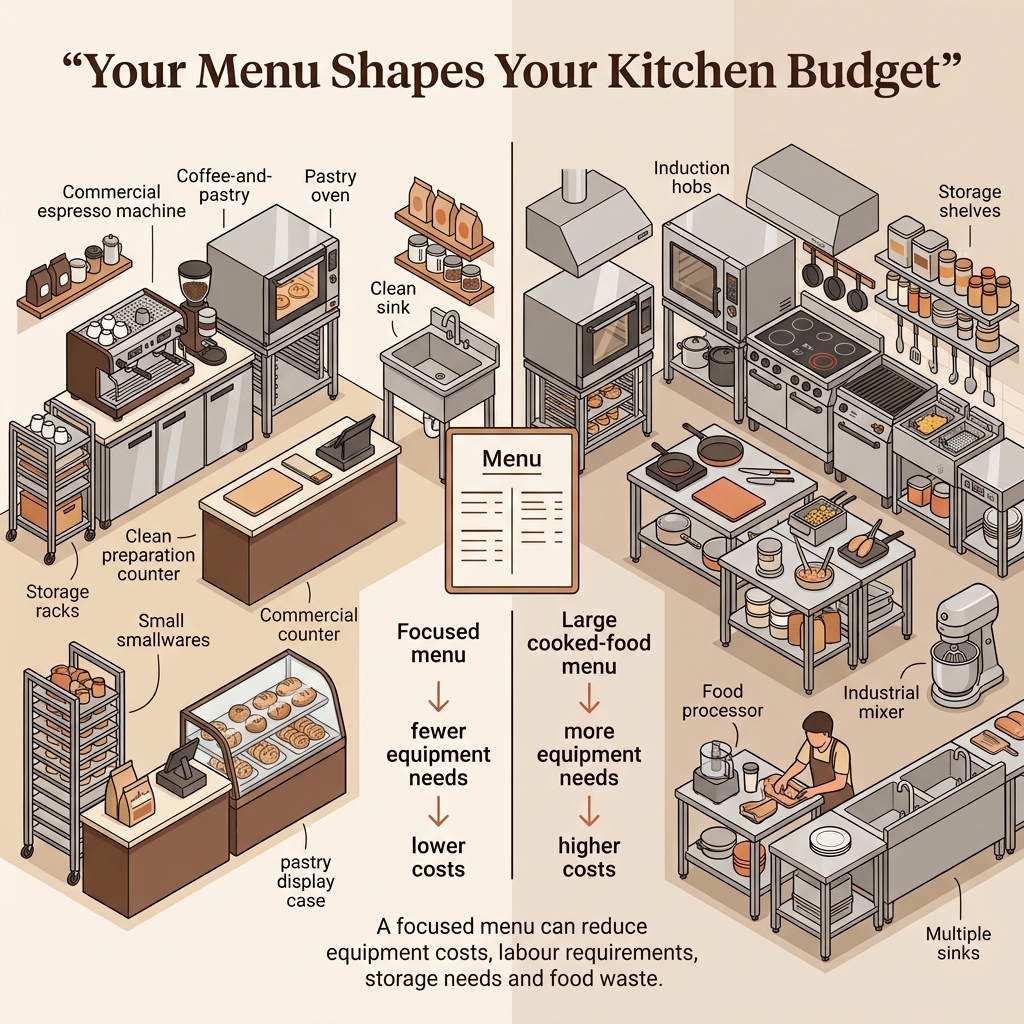
4. Kitchen Equipment: S$30,000–S$100,000
Your menu has a direct effect on your kitchen budget.
A coffee-and-pastry concept may need considerably less equipment than a café serving brunch, fried food or a large cooked-food menu.
Possible equipment includes:
-
Ovens
-
Induction hobs or gas equipment
-
Grills and fryers
-
Preparation tables
-
Commercial sinks
-
Mixers and food processors
-
Display cases
-
Storage racks
-
Kitchen smallwares
A focused menu can make operations easier and reduce equipment costs, labour requirements, storage needs and food waste.

5. Refrigeration, Ice and Water Filtration: S$16,500–S$58,000
Depending on your menu and service volume, you may need:
-
Upright chillers
-
Under-counter refrigerators
-
Freezers
-
Display cases
-
An ice machine
-
Water filtration and scale control
Singapore’s tap water is safe to drink, but espresso equipment still needs suitable filtration. Proper water treatment helps protect flavour and reduce scale-related repairs.
Remember to include filter replacement and servicing in your regular operating budget.
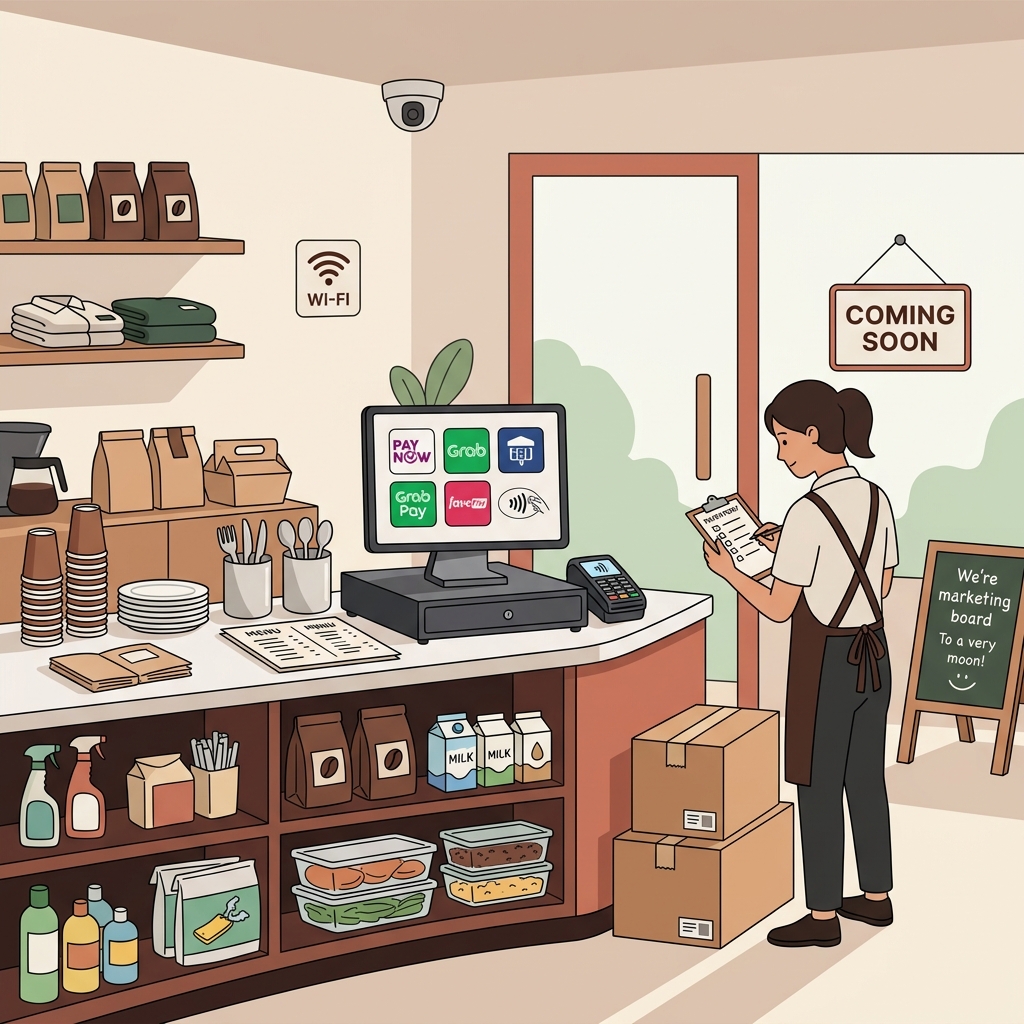
6. Furniture, POS and Opening Stock: S$28,000–S$75,000
This category may include:
-
Tables and chairs
-
Cups, plates and cutlery
-
POS equipment
-
Payment terminals
-
Menus and signage
-
Wi-Fi and security cameras
-
Coffee beans and milk
-
Food ingredients
-
Takeaway packaging
-
Cleaning supplies
-
Uniforms
-
Opening marketing
Customers expect convenient cashless payments, so choose a POS system that supports the payment methods commonly used in Singapore.
You can also control initial costs by buying opening stock carefully and avoiding excessive inventory before you understand your sales patterns.
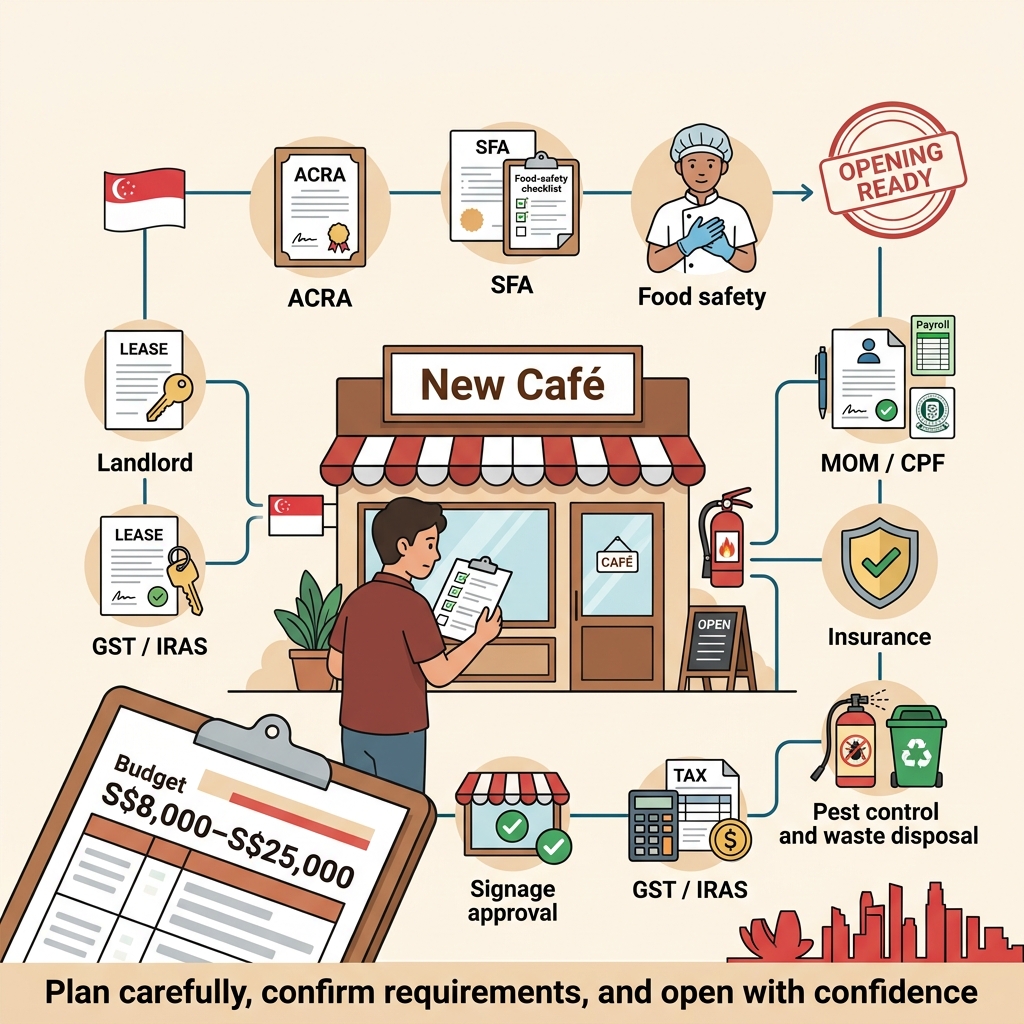
7. Registration and Compliance: S$8,000–S$25,000
Depending on your business model and premises, you may need to budget for:
-
Business registration with ACRA
-
Relevant Singapore Food Agency licensing
-
Food-safety training for food handlers
-
Fire-safety and building approvals
-
Employment contracts and payroll setup
-
CPF registration and payments
-
Insurance
-
Pest control and waste disposal
-
Signage approvals, where required
-
GST registration, if applicable
Requirements can vary. Confirm current obligations with the relevant authorities, including SFA, ACRA, MOM, CPF Board, IRAS and SCDF, as well as your landlord.
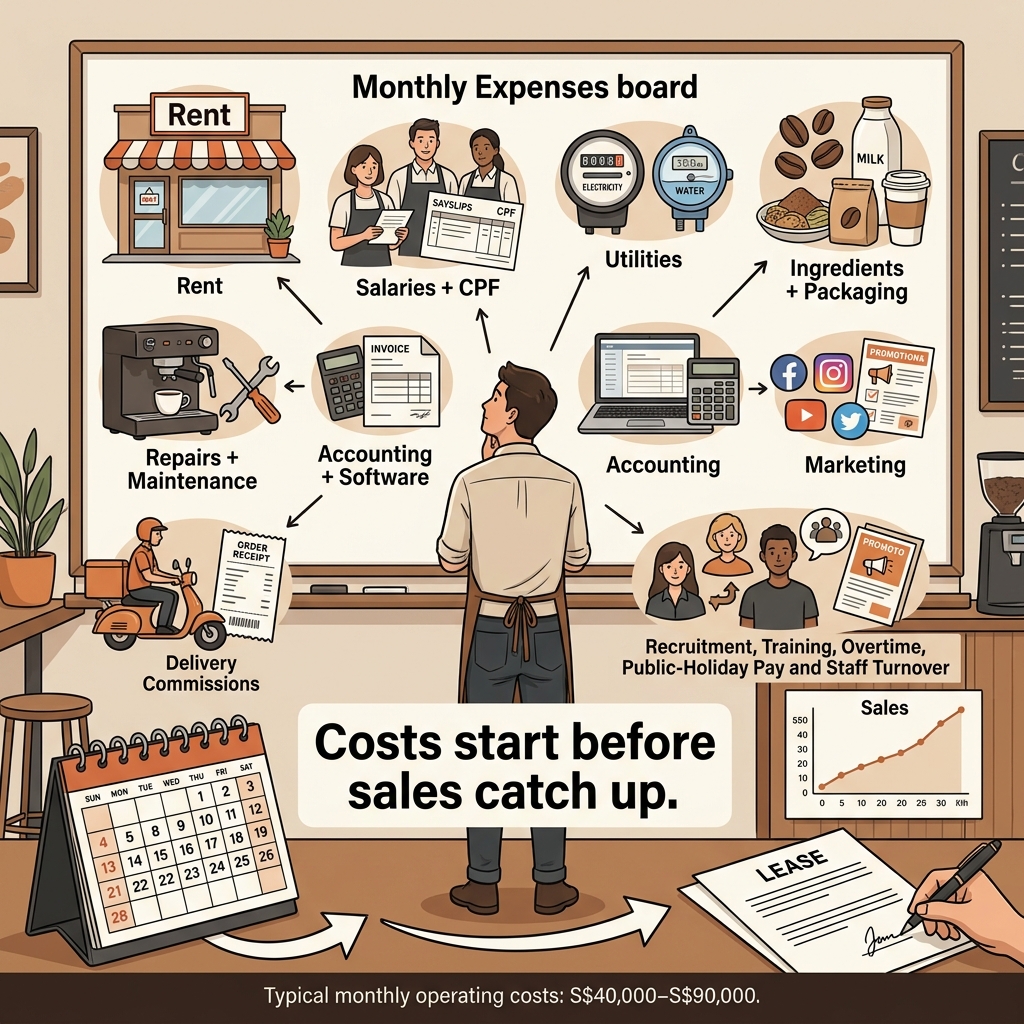
8. Monthly Operating Costs
A modest café may spend approximately S$40,000–S$90,000 per month on:
-
Rent
-
Salaries and employer CPF contributions
-
Utilities
-
Ingredients and packaging
-
Repairs and maintenance
-
Accounting and software
-
Marketing
-
Delivery-platform commissions
Also allow for recruitment, training, overtime, public-holiday pay, staff turnover and foreign-worker requirements where applicable.
These costs begin soon after signing the lease, even if sales take time to build.
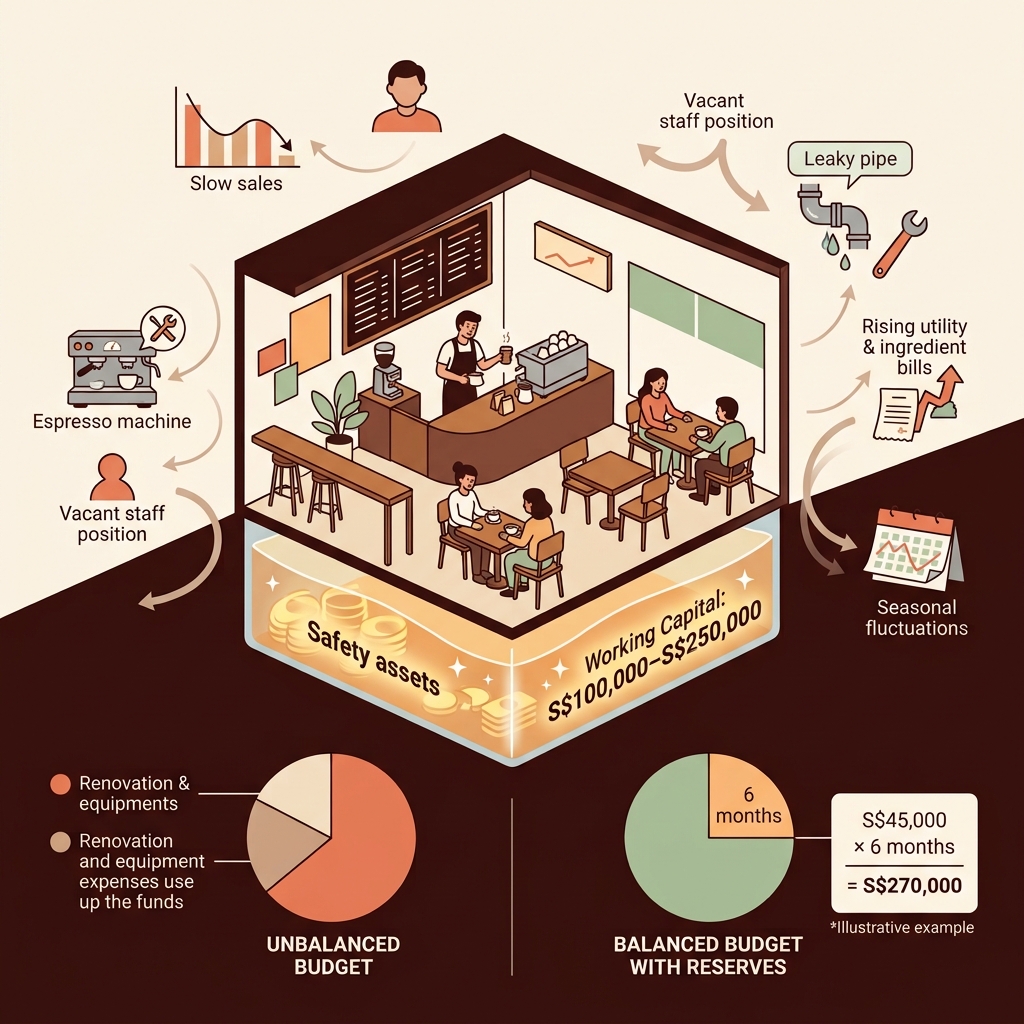
9. Working Capital: S$100,000–S$250,000
Working capital is the money that keeps the café running while the business establishes itself.
For example, if your café needs S$45,000 per month to operate, six months of runway would be:
S$45,000×6=S$270,000\text{S\$45,000} \times 6 = \text{S\$270,000}
You may not need exactly six months in every situation, but the example shows why opening costs are only part of the financial plan.
Keeping a cash reserve gives you more room to manage:
-
Slower-than-expected sales
-
Equipment breakdowns
-
Hiring delays
-
Unexpected repairs
-
Higher utility or ingredient costs
-
Seasonal fluctuations
Try not to use your entire budget on renovation and equipment. A well-funded café is better positioned to maintain consistent service after opening.
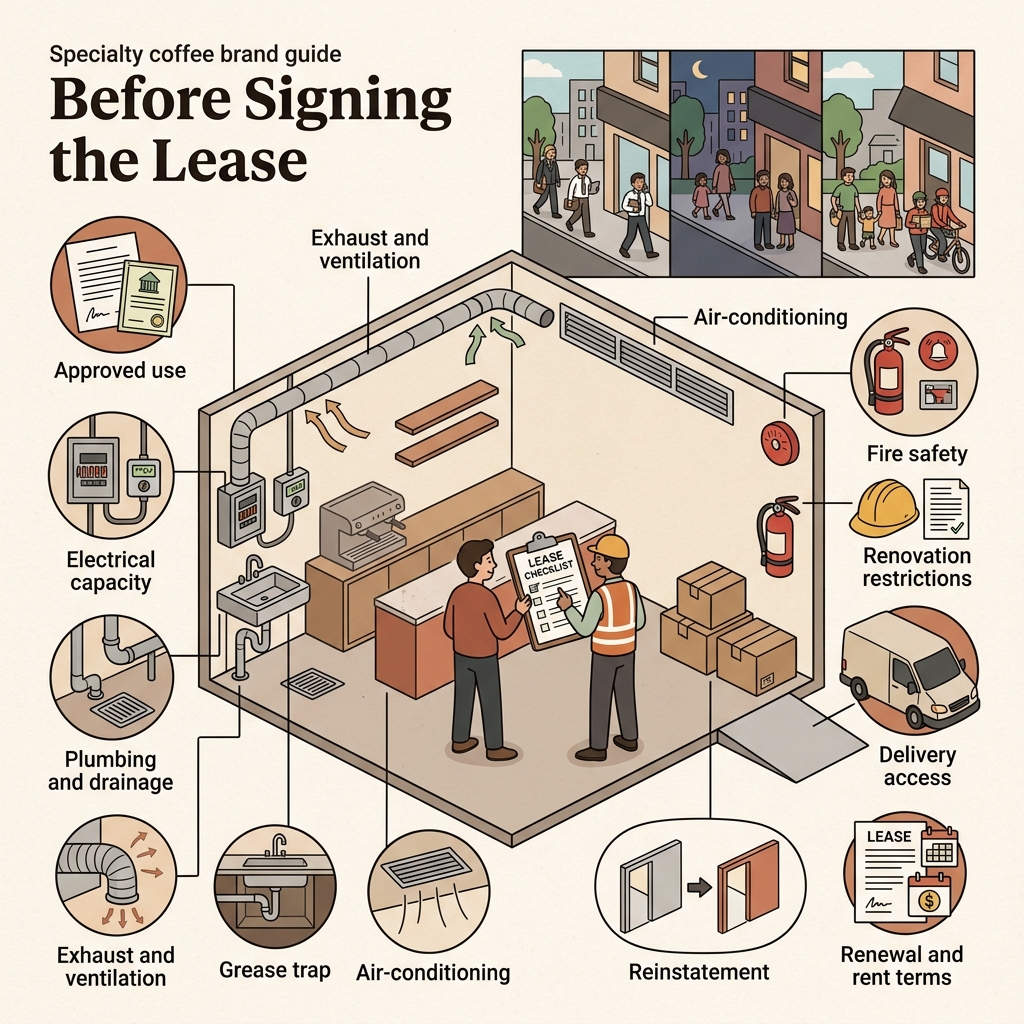
Before Signing the Lease
Have the premises inspected and confirm:
-
Approved use of the unit
-
Electrical capacity
-
Plumbing and drainage
-
Exhaust and ventilation requirements
-
Grease-trap requirements
-
Air-conditioning capacity
-
Fire-safety obligations
-
Renovation restrictions
-
Delivery access
-
Reinstatement conditions
-
Lease-renewal and rent-increase terms
Visit the area at different times of day and on different days of the week. An office district may be busy from Monday to Friday but quiet at weekends. A residential area may rely more on regular customers, families and delivery orders.
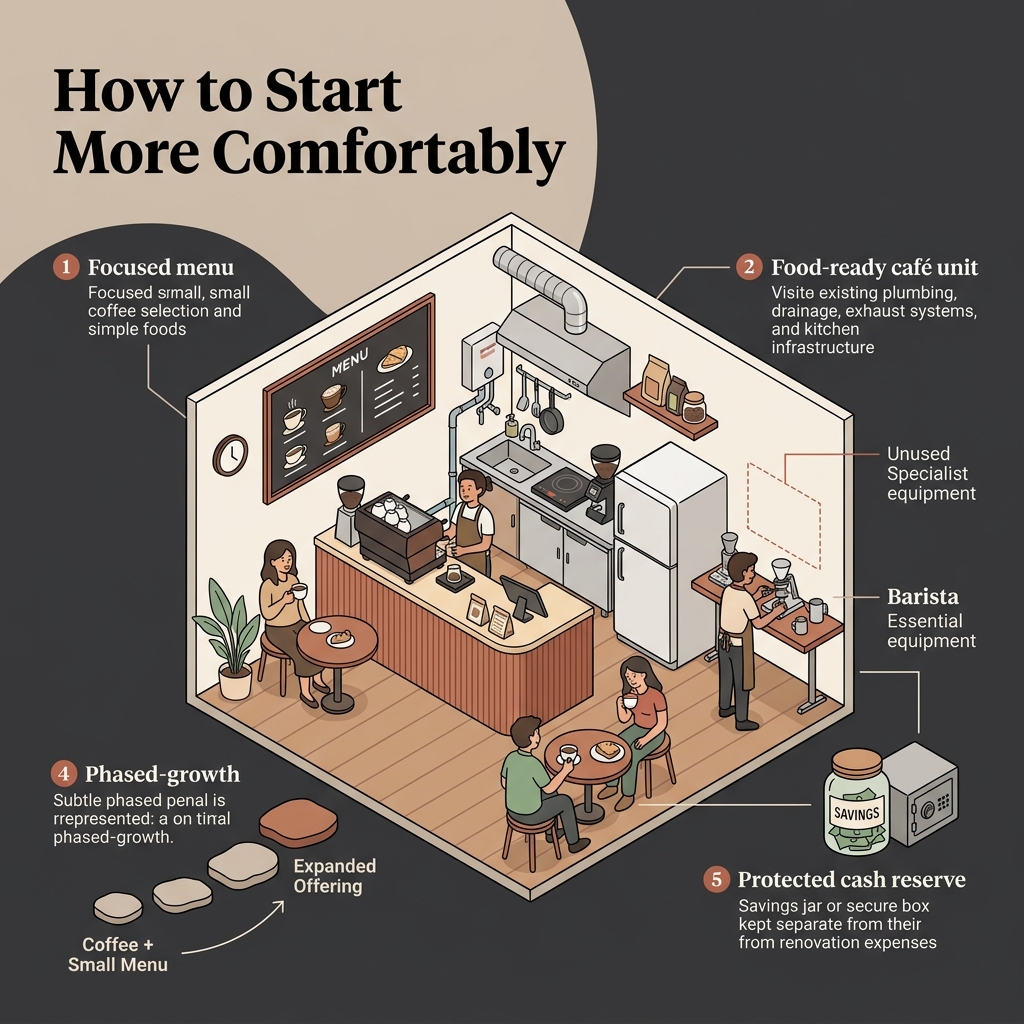
How to Start More Comfortably
A smaller, focused café can be a sensible first step. You could consider:
-
Starting with a focused menu
Offer a smaller range of drinks and food that your team can prepare consistently. -
Choosing a food-ready unit
Existing drainage, exhaust and kitchen infrastructure may reduce renovation costs. -
Buying only essential equipment
Add specialised equipment as demand becomes clearer. -
Launching in phases
Begin with coffee and a small food selection before expanding the menu. -
Protecting your cash reserve
Treat working capital as part of the startup budget, not as money left over after renovation.
Frequently Asked Questions (FAQs)
How much money do I need to open a small café in Singapore?
For a modest café in an existing food-ready unit, a practical planning range is approximately S$300,000 to S$500,000. A major renovation, full kitchen or prime location may increase the budget significantly.
What is usually the largest expense?
Renovation and building works are often the largest upfront expense. However, working capital may be the most important financial safeguard because the café must continue paying its bills while sales build.
Can I open a café with a smaller budget?
Possibly, depending on the concept and premises. A takeaway kiosk, small coffee bar or food-ready unit may require less capital than a full-service café.
You can reduce costs through:
-
A smaller menu
-
Limited seating
-
Phased opening
-
Leased equipment
-
Existing kitchen infrastructure
-
Careful control of initial stock
Do not cut corners on food safety, essential infrastructure, equipment reliability or cash reserves.
Final Thoughts
Opening a café in Singapore is a substantial commitment, but the numbers become easier to manage when the budget is divided into clear categories.
A sensible plan should cover:
-
The premises
-
Essential renovation
-
Reliable coffee equipment
-
A practical menu
-
Compliance and staffing
-
Several months of operating costs
Starting with a focused concept can help you control spending while building a strong foundation for future growth. The aim is not simply to open the doors, but to keep serving good, consistent coffee after the opening excitement has passed.
Estimated Café Startup Costs
These are planning estimates rather than fixed prices. Your actual budget will depend on the premises, menu, equipment choices and amount of renovation required.
Plan for approximately S$300,000–S$500,000 for a modest café, with larger concepts potentially costing S$800,000 or more.
Inspect the premises before signing to identify issues with exhaust, drainage, electrical supply and approvals.
Keep enough working capital to operate comfortably while customer traffic and sales develop.

About Highlander Coffee
Founded in 2004, Highlander Coffee is a gourmet coffee roaster and distributor of quality espresso machines in Singapore. As a pioneer in coffee education, we have offered professional barista and coffee appreciation workshops since our inception, training thousands of enthusiasts and professionals.
Our exclusive Highlander Espresso Bar provides a delightful coffee experience.
Our mission is to simplify your coffee journey with consistent quality, personalized service, and reliable after-sales support.
To elevate your coffee experience, visit our page at Highlander Coffee and get in touch with us!
Blog Article of:
